The Charm of Dutch Canals
Amsterdam’s Iconic Canal Belt
Amsterdam’s canals are among the most famous in the world, forming a UNESCO World Heritage site. Built in the 17th century, the canals define the city’s layout and character. A canal cruise offers a unique perspective of the city, passing historic gabled houses, charming bridges, and vibrant houseboats. The Prinsengracht, Herengracht, and Keizersgracht canals showcase some of the city’s most beautiful architecture. Exploring the Jordaan district reveals hidden courtyards, boutique shops, and cozy cafés, making it a favorite area for visitors seeking a mix of history and modern charm.

Utrecht’s Historic Waterways
Utrecht’s canals differ from Amsterdam’s with their unique wharf cellars, which have been converted into restaurants and shops along the Oudegracht. The city’s Dom Tower, the tallest church tower in the Netherlands, provides a panoramic view of the canal-lined streets. Taking a boat tour or simply strolling along the waterways allows visitors to experience Utrecht’s blend of medieval and contemporary influences.

The Tranquil Canals of Giethoorn
Known as the “Dutch Venice,” Giethoorn is a picturesque village where canals replace roads. Thatched-roof cottages, wooden bridges, and lush gardens line the waterways, creating a fairytale-like setting. Renting a whisper boat or canoe is the best way to explore Giethoorn’s serene atmosphere, making it an idyllic escape from city life.

The Splendor of Tulip Fields
Keukenhof: The World’s Largest Flower Garden
Keukenhof, located in Lisse, is the ultimate destination for tulip lovers. Open only in spring, this world-renowned garden displays over seven million flowers, with countless varieties of tulips in vibrant colors. The themed gardens and artistic floral arrangements create a mesmerizing experience for visitors. Walking or cycling through the surrounding tulip fields offers breathtaking views of endless rows of blossoms stretching across the landscape.

The Flower Route: A Scenic Drive Through Blooms
The Flower Route, running from Haarlem to Leiden, is one of the most scenic drives in the Netherlands during spring. This route passes through fields of tulips, daffodils, and hyacinths, forming a colorful patchwork of floral beauty. Stopping at local flower farms and market stalls along the way allows visitors to take home a piece of Dutch horticultural excellence.

Noordoostpolder: Hidden Gem of Tulip Fields
Less known than Keukenhof, Noordoostpolder boasts vast tulip fields with fewer crowds. Located in Flevoland, this region provides an opportunity to witness the splendor of tulips in a more tranquil setting. The Tulip Festival in Noordoostpolder showcases floral exhibitions, guided tours, and artistic displays celebrating the Dutch flower industry.

Windmill Villages and Dutch Heritage
Kinderdijk: A UNESCO Windmill Wonderland
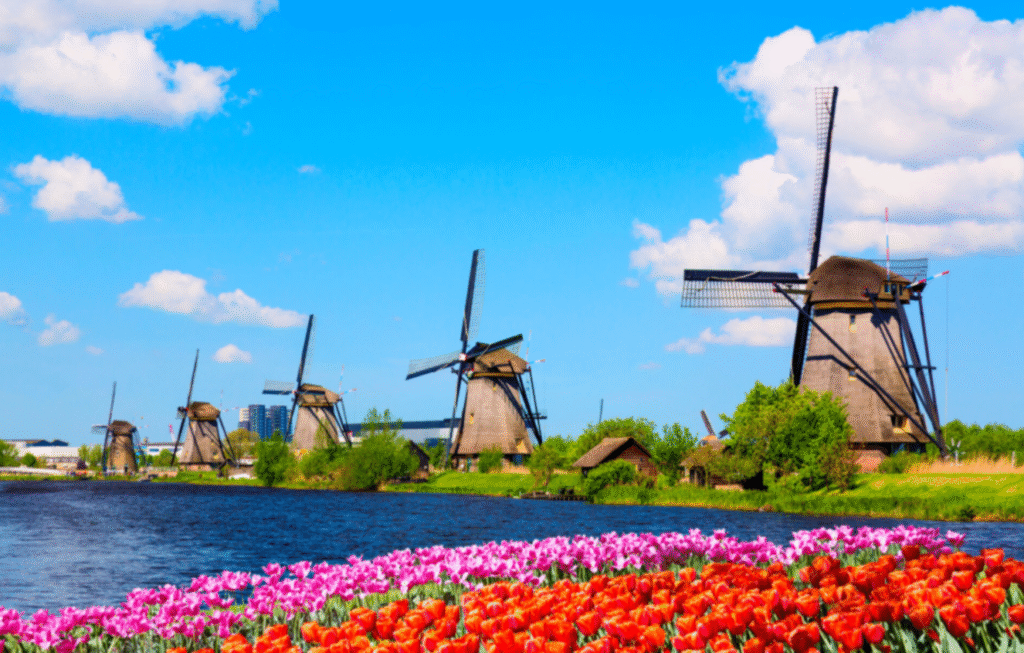
Kinderdijk is home to 19 well-preserved windmills that date back to the 18th century. This UNESCO World Heritage site offers a glimpse into the Netherlands’ battle against water, as the windmills were built to manage flooding and drainage. Walking and cycling paths wind through the area, providing stunning views of these iconic Dutch structures. Visitors can enter some of the windmills to learn about their history and functionality.

Zaanse Schans: A Living Museum of Windmills
Zaanse Schans, located near Amsterdam, is a historical village where working windmills continue traditional milling practices. The village also features wooden houses, craft workshops, and museums dedicated to Dutch heritage. Demonstrations of cheese making, clog carving, and chocolate production offer hands-on experiences for visitors. Climbing inside an operational windmill allows a closer look at the intricate mechanics behind these engineering marvels.

The Open-Air Museum of Schiedam
Schiedam is famous for its towering windmills, which are the tallest traditional windmills in the world. These mills played a significant role in producing jenever, the Dutch precursor to gin. The city’s open-air museum provides insights into the history of windmill craftsmanship and Dutch distilling traditions. A visit to Schiedam combines historical exploration with modern culinary delights in its charming old town.

Dutch Culture and Traditions
Cycling: The Best Way to Explore
Cycling is an essential part of Dutch culture, with extensive bike paths making it the best way to explore both cities and countryside. Renting a bike in Amsterdam, Utrecht, or Rotterdam allows visitors to experience the country like a local. The Hoge Veluwe National Park offers a scenic cycling route through forests, sand dunes, and heathlands, with free white bikes available for use. The Waterland region, north of Amsterdam, provides a picturesque cycling trail through quaint fishing villages and green pastures.

Dutch Markets and Street Food
Dutch markets are vibrant places to experience local flavors and traditions. The Albert Cuyp Market in Amsterdam is one of the largest and best-known, selling everything from fresh produce to Dutch delicacies. Stroopwafels, warm waffles filled with caramel syrup, are a must-try treat. The Markthal in Rotterdam is a modern food hall where visitors can sample a variety of Dutch and international dishes. In cities like Utrecht and The Hague, haring stalls serve raw herring, a classic Dutch street food often eaten with onions and pickles.

King’s Day: A National Celebration
King’s Day, celebrated on April 27th, is the Netherlands’ biggest national holiday. Cities and towns transform into massive street festivals with music, flea markets, and orange-clad revelers. Amsterdam’s canals fill with boats hosting parties, while other cities such as Utrecht and The Hague feature live performances and cultural events. It is a day of national pride and an opportunity for visitors to join in the joyous atmosphere.